Identifying the flumencloud accessory
An inflow band detached from the wall cloud that’s found alongside stronger cumulonimbus clouds
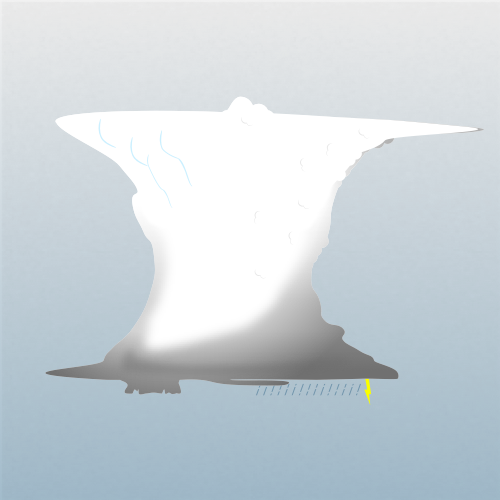
Translated from latin meaning river, the ‘flumen’ cloud accessory is found only in the cumulonimbus cloud type. No other cloud type besides a cumulonimbus cloud can be paired with a flumen cloud accessory. The proper cloud classification abbreviation for this cloud type and accessory is ‘Cb flm’.
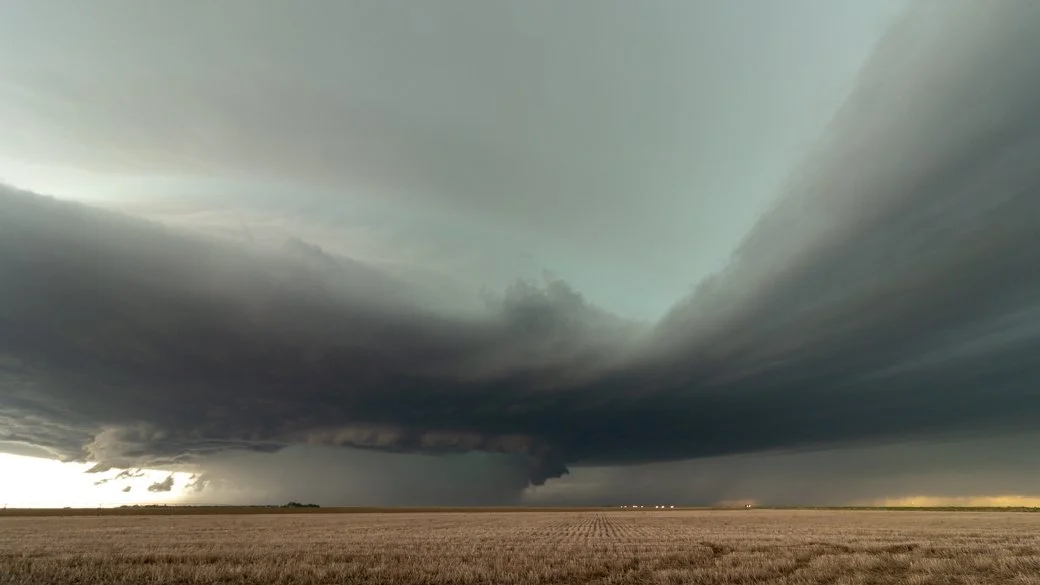
Flumen clouds get their name from appearing as a river of moisture that flows into the main base of a cumulonimbus. Nicknamed beaver tail clouds because of their flat, wide appearance, these types of cloud formations are usually found paired with stronger thunderstorms and supercells. In relation to other cloud features and accessories, finding a good example of a flumen cloud formation doesn’t happen very often.
Traveling to tornado alley during storm season will increase your chances of seeing one. They’re a type of inflow band, which is a name used for a strip of moisture that feeds and provides fuel to a thunderstorm. When trying to identify a flumen cloud formation, don’t confuse them with tail clouds (cauda cloud feature).
Both clouds are types of inflow bands, but the cauda cloud feature is found attached to the storm’s wall cloud, while the flumen cloud accessory can be significantly larger and high in altitude, where it feeds into the updraft of the cumulonimbus.