Keep the complete cloud system on one page
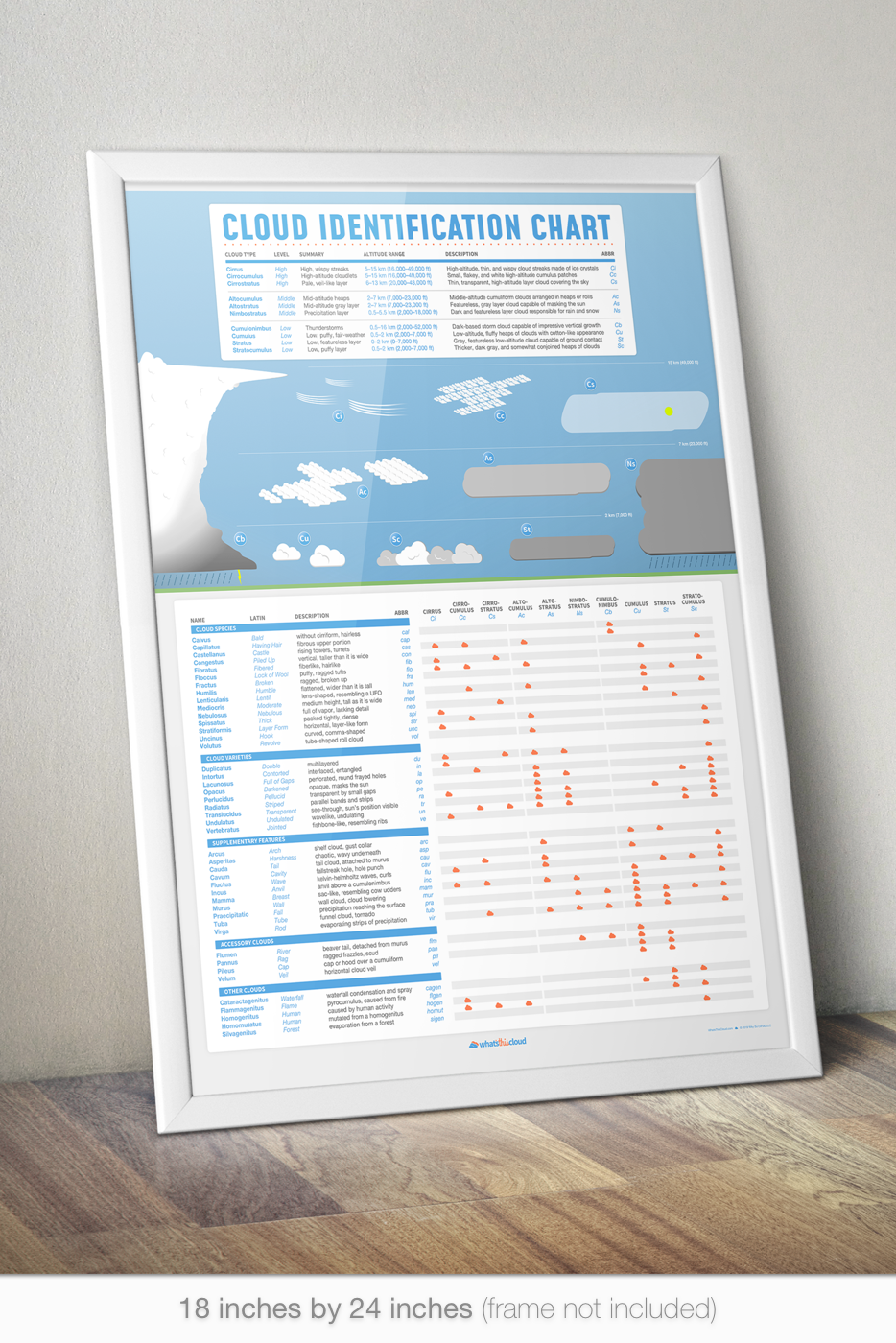
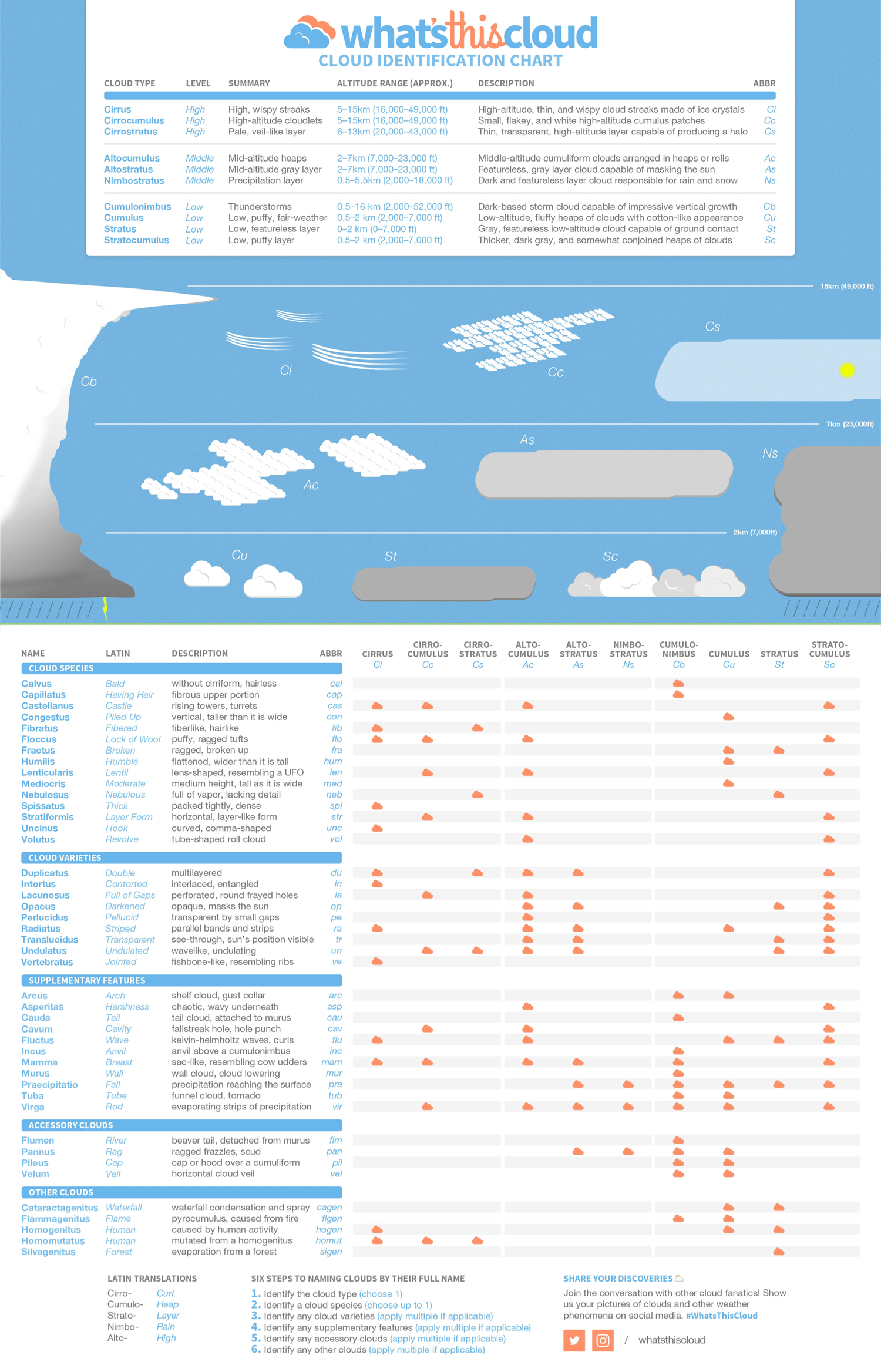
Below is a cloud identification chart that we've designed as a learning resource to help you better identify and classify clouds. It's a one-sheet infographic intended to be used to learn about not only the ten main cloud types, but help you visualize different cloud species, varieties, features, and accessories that can be attributed to each cloud type on one page.
You're welcome to use the image below, but we've also put this chart into a PDF format to take with you on the go. The PDF includes working links of each cloud type on the top half of the page as well as the cloud names down the left side of the chart, which takes you to each cloud's associated page on our website so you're able to read more about each kind of cloud if you'd like to.
Download PDFWhat the cloud identification chart includes
Start with the ten cloud types, then use the classification matrix and translation guide to add detail only when it applies.
The ten cloud types
The ten main cloud types featured on the top half of the poster include a summary and description of each cloud, their approximate altitude, abbreviation, and a graphical representation of each cloud in relation to other cloud types.
Explore the ten cloud types →Compatible cloud subtypes
Further below that is a chart that's been created to help you determine what cloud type can be matched up the different cloud species, varieties, features, etc. For example, the calvus cloud species can only be associated with the cumulonimbus cloud type. No other cloud type besides a cumulonimbus cloud can receive a calvus classification. As a result, there is only one orange cloud icon found in the calvus row under the cumulonimbus column.
Names, terms & full classifications
Included in this chart is each cloud's name, latin-translated term, a short description, and abbreviation.
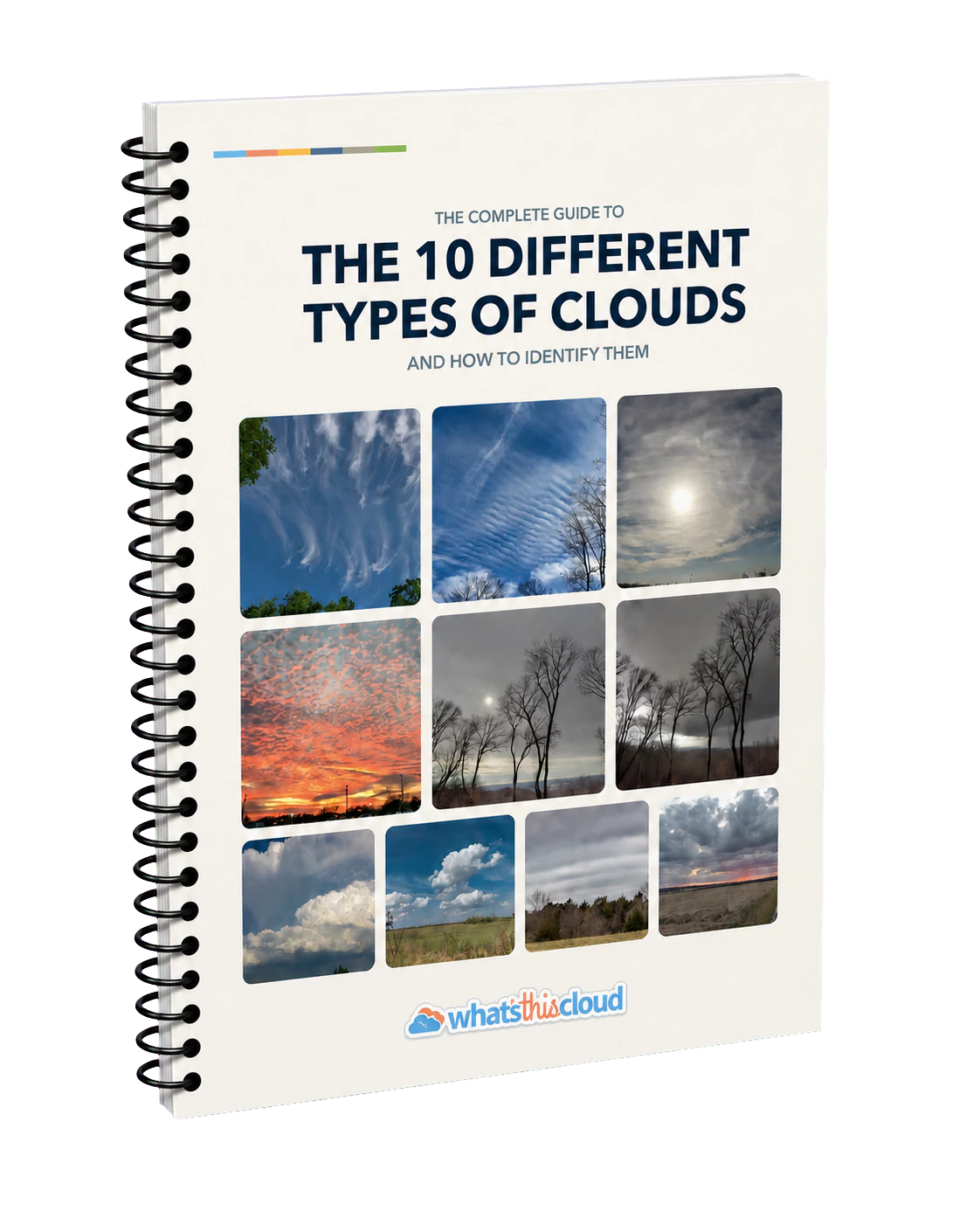
At the bottom of the poster is a quick latin translation cheat sheet and a refresher pertaining to classifying clouds by their full name, which is explained in detail in our cloud identification guide.
How to use the chart
Use the chart as a visual path from a broad cloud type to a more detailed name. The three sections work together, so you can stop as soon as the evidence in the sky stops being clear.
- Start at the top.Compare the cloud's altitude, overall form, and abbreviation with the ten main cloud types.
- Check the matrix.See which species, varieties, supplementary features, and accessory clouds can pair with that type.
- Follow the links.Open the working links in the PDF whenever you want photographs, illustrations, and a deeper explanation.
Printable cloud observation worksheet
Put the chart into practice with a two-page sky journal and teacher key. Sketch a cloud, record its shape and texture, explain your identification, and match three original illustrations to their cloud names.
The teacher page includes the answers, observation prompts, and a quick reference to all ten cloud types. Print the student page on its own or keep both pages as a field companion.
Want the chart on your wall?
Turn the cloud system into a larger visual reference for a classroom, office, studio, or field station. Explore our cloud identification posters and choose the design that works best for your space.
Shop cloud posters