
Learn About the 10 Different Types of Clouds
Explore the 10 cloud types through original illustrations and compare their names, altitude levels, appearances, colors, precipitation, and sky cover before building a full cloud classification.
Introducing the 10 main cloud types
When you spot a cloud in the sky, it will be one of the ten cloud types, or genera, listed below. To better understand what cloud you’re observing, it’s best to get to know these 10 different cloud types based on their different species, varieties, and features. Knowing how they form, their altitude levels (high, middle, or low base), and what makes each cloud type unique and different from one another will also be helpful.
The ten cloud types below are organized by altitude level. Clicking on each of the cloud illustrations will lead you to a page that will provide you with a description, photograph examples, and illustrations that break down each cloud type’s associated cloud species, cloud varieties, supplementary features, accessory clouds, and other potential clouds. ⛅
Aren't there only four types of clouds?
That is a common way to learn the basics. Introductory guides often group clouds into four broad forms: cirrus, cumulus, stratus, and nimbus. Those names are useful building blocks and appear throughout cloud terminology, but they simplify the full classification system. The international system recognizes ten main cloud genera outlined below.
They are commonly organized by where their bases usually form: high, middle, or low. The levels overlap and vary by latitude, and cumulus or cumulonimbus can grow vertically through more than one level. A full cloud classification can then add a species, variety, supplementary feature, accessory cloud, or origin term.
High-level clouds



Middle-level clouds


Low-level clouds
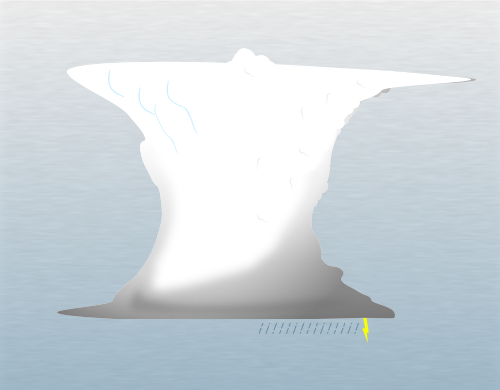
Cumulonimbus clouds
A towering storm cloud that can develop an anvil-shaped top
Explore cumulonimbus clouds →
Cumulus clouds
Detached cotton-like heaps with flatter bases
Explore cumulus clouds →
Stratus clouds
A low, uniform gray layer, much like lifted fog
Explore stratus clouds →
Stratocumulus clouds
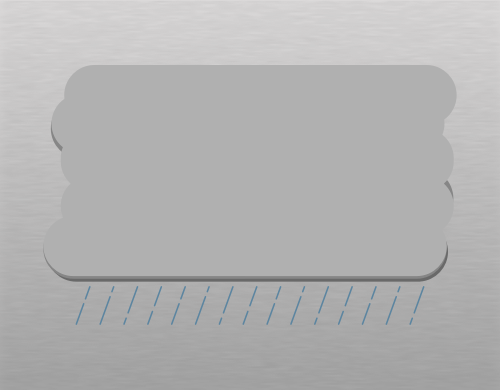
A low field of broad rolls or rounded masses
Explore stratocumulus clouds →Cloud types and names at a glance
Use this cloud types chart to compare the names, levels, name origins, typical appearances, colors, precipitation, and sky cover for all ten cloud genera. The altitude refers to the level where the cloud base is most commonly found; several cloud types can extend beyond that level.
| Cloud name | Level | Name origin | Typical appearance | Color | Precipitation | Sky cover |
|---|---|---|---|---|---|---|
| Cirrus (Ci) | High | Derives from cirro-, meaning curl | High, Wispy Streaks | White to light gray | None | Mostly sunny to sunny |
| Cirrocumulus (Cc) | High | Derives from cirro-, meaning curl, and cumulo-, meaning heap | High-altitude Cloudlets | White to light gray | Virga only | Partly sunny to mostly sunny |
| Cirrostratus (Cs) | High | Derives from cirro-, meaning curl, and strato-, meaning layer | Pale, Veil-like Layer | White to light gray | None | Partly sunny to mostly sunny |
| Altocumulus (Ac) | Middle | Derives from alto-, meaning high, and cumulo-, meaning heap | Mid-altitude Cloud Heaps | White to Gray | Virga only | Mostly cloud to mostly sunny |
| Altostratus (As) | Middle | Derives from alto-, meaning high, and strato-, meaning layer | Mid-altitude Gray Layer | Gray to dark gray | Uncommon | Cloudy to mostly cloudy |
| Nimbostratus (Ns) | Middle | Derives from nimbo-, meaning rain, and strato-, meaning layer | Precipitation Layer | Light gray to very dark gray | Always | Cloudy to mostly cloudy |
| Cumulonimbus (Cb) | Low base with strong vertical growth | Derives from cumulo-, meaning heap, and nimbo-, meaning rain | Thunderstorms | Light gray to very dark gray | Very common, heavy at times | Cloudy to partly sunny |
| Cumulus (Cu) | Low base with vertical growth | Derives from cumulo-, meaning heap | Low, Puffy Heaps | White to gray | Uncommon | Mostly sunny to sunny |
| Stratus (St) | Low | Derives from strato-, meaning layer | Low, Featureless Layer | Gray to dark gray | Uncommon | Cloudy to mostly cloudy |
| Stratocumulus (Sc) | Low | Derives from strato-, meaning layer, and cumulo-, meaning heap | Low, Puffy Layer | Light gray to dark gray | Uncommon | Mostly cloudy to mostly sunny |
Beyond the 10 cloud types
Building a full cloud classification
Identifying the cloud genus is the starting point. A full classification can add a species for shape, a variety for arrangement or transparency, supplementary features, accessory clouds, and terms that describe how a cloud formed. These details refine the cloud type and help observers describe what they see more precisely.
Learn cloud identification with a free 136-page ebook
Take the visual guide with you. The ebook explains the ten types of clouds with original photographs, illustrations, identification tips, and comparisons between similar clouds.
Download Here