Stratus Clouds:Low, Featureless Layer

Stratus clouds are low, uniform gray layers that resemble fog lifted above the ground and can obscure hills or tall buildings. They commonly bring dull overcast conditions, mist, drizzle, freezing drizzle, or light snow grains rather than heavy precipitation.

Stratus nebulosus opacus (St neb op)

How to identify stratus clouds

Gray, featureless low-altitude layer cloud capable of ground contact

When you think of a cloudy, dreary day, you might have stratus clouds on your mind. Stratus clouds are blanket clouds that sit low to the ground, and on occasion, come in contact with the ground, better known as fog. If you live in a city with tall buildings, you might know stratus clouds by their ability to obscure the tops of buildings These clouds only have two species associated with them: nebulosus and fractus.

Stratus nebulosus clouds are arguably the dullest of the clouds out there. They’re featureless, lack detail, and probably wouldn’t be considered picturesque (unless you’re taking pictures in a graveyard, or if it’s dissipating fog). Stratus fractus aren’t exactly picturesque either, but at least there’s a little detail, as these clouds are broken up shards of stratus clouds.

Depending on the conditions, stratus clouds can mask the sun (opacus cloud variety), though sometimes the sun can be observed (translucidus cloud variety). Additionally, you can see wavelike, undulating features in them (undulatus cloud variety). Regardless, stratus clouds aren’t the most memorable memorable cloud and often leave you wishing for sunnier days.

Is it stratus? Check these four clues

Confirm the very low base and smooth coverage. Gray color alone does not distinguish stratus from higher or deeper layers.

  1. Very low base

    The deck may hide nearby hills, ridges, buildings, or treetops and can merge directly with fog.

  2. Uniform layer

    The main cloud looks smooth or softly textured without separate rounded rolls or heaps.

  3. Gray, fog-like appearance

    The sky often looks flat and muted, with little visible vertical structure.

  4. Light precipitation

    Drizzle, freezing drizzle, mist, or light snow grains are more typical than sustained heavy rain.

Read how the stratus layer changes

Texture, gaps, and ragged fragments can reveal whether the low deck is stable, breaking apart, or tied to nearby precipitation.

  1. 1Smooth low sheetNebulosusPersistent gray conditionsA featureless fog-like layer spreads across most or all of the sky.Open the field note →
  2. 2Opaque low deckOpacusDrizzle possibleThe cloud is thick enough to hide the Sun or Moon completely.Open the field note →
  3. 3Ragged fragmentsFractusMoist air or nearby rainBroken scud-like pieces form in turbulence, near terrain, or below precipitation clouds.Open the field note →
  4. 4Layer gains structureBreaking rollsClouds may be liftingIf the deck separates into broad rounded elements, it may be becoming stratocumulus.Open the field note →

Classifying stratus clouds beyond the cloud type

Begin with stratus as the cloud type, then add species, varieties, supplementary features, accessory clouds, or origin terms only when each detail is visible. Every illustration below links to its complete field note.

Stratus cloud species

2 cloud species are associated with stratus clouds. Open any field note to compare the illustration with photographs and identification guidance.

Stratus cloud varieties

3 cloud varieties are associated with stratus clouds. Open any field note to compare the illustration with photographs and identification guidance.

Stratus supplementary features

2 supplementary features are associated with stratus clouds. Open any field note to compare the illustration with photographs and identification guidance.

Stratus other clouds

3 other clouds are associated with stratus clouds. Open any field note to compare the illustration with photographs and identification guidance.

Compare stratus with similar cloud types

Use cloud-base level, texture, structure, and sky coverage together before choosing the closest match.

Stratus vs. stratocumulus

Stratus is a smooth, low, fog-like layer. Stratocumulus retains broad rounded masses, rolls, or cells within the low deck.

Best clueVisible rounded elements favor stratocumulus; a nearly featureless sheet favors stratus.

Illustration of stratus clouds
Stratus
Illustration of stratocumulus clouds
Stratocumulus

Stratus vs. altostratus

Stratus has a very low base and can obscure nearby terrain. Altostratus is a higher blue-gray sheet, sometimes with a watery Sun visible through it.

Best clueUse nearby terrain: a deck touching hills or buildings is likely stratus.

Illustration of stratus clouds
Stratus
Illustration of altostratus clouds
Altostratus

Stratus vs. nimbostratus

Stratus is shallow and usually produces drizzle or light snow grains. Nimbostratus is much deeper and brings broad, sustained rain or snow.

Best clueContinuous moderate precipitation and a deeply obscured base favor nimbostratus.

Illustration of stratus clouds
Stratus
Illustration of nimbostratus clouds
Nimbostratus

See stratus cloud classifications in action

Follow real photographs through the visible clues that lead to each complete cloud classification.

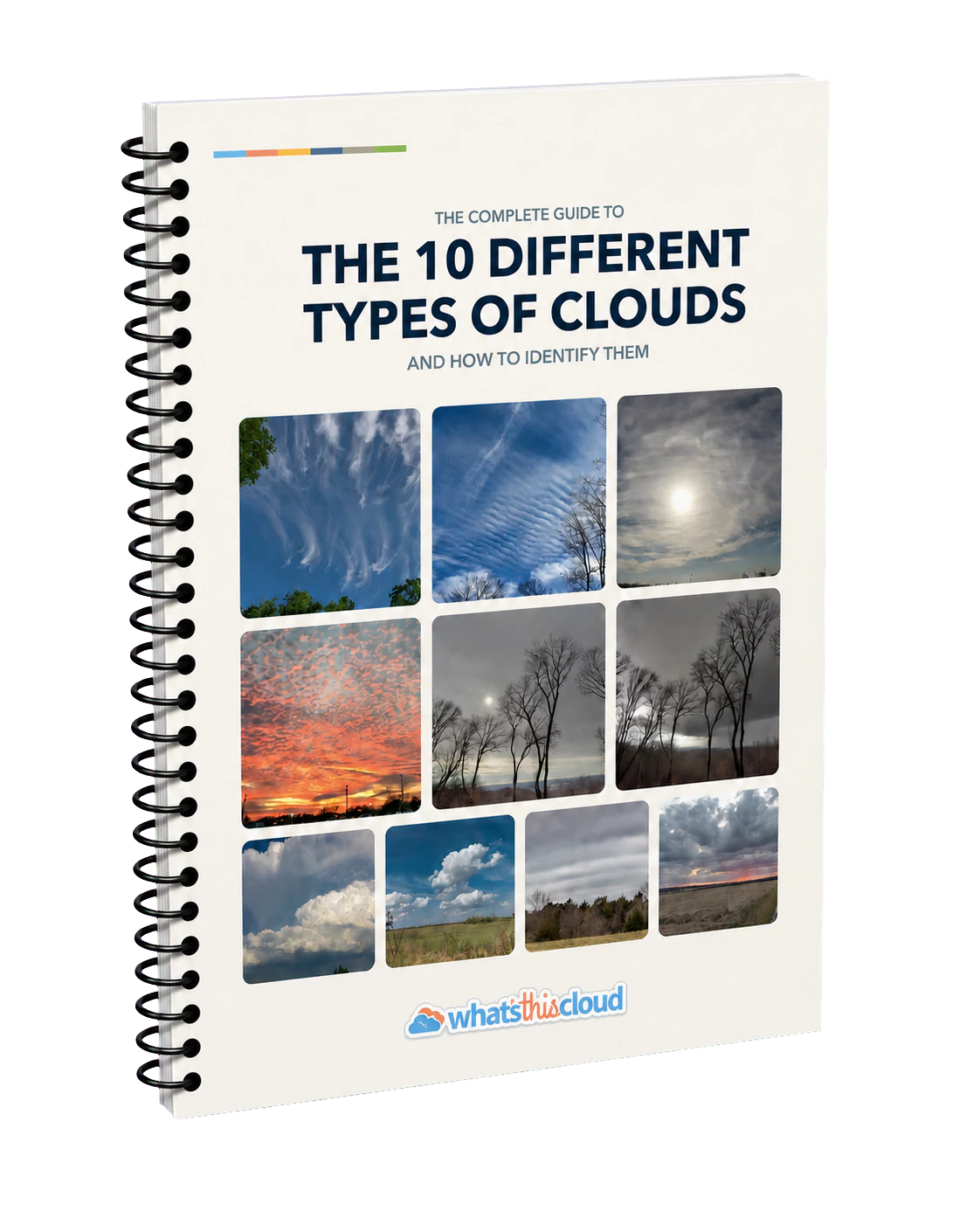
Cover of the free cloud types ebook

Learn cloud identification with a free 80+ page ebook

Take the visual guide with you. The ebook explains the ten types of clouds with original photographs, illustrations, identification tips, and comparisons between similar clouds.

Download Here